Jump to content
Toggle menu
Toggle preferences menu
Toggle personal menu
Not logged in
Your IP address will be publicly visible if you make any edits.

Since 7 October 2026 every request to landrace.wiki passes through Cloudflare, a security service brought in after a denial-of-service attack made the site unreachable. The Privacy policy now explains what this means for your data.

Portal:Americas
Introduction

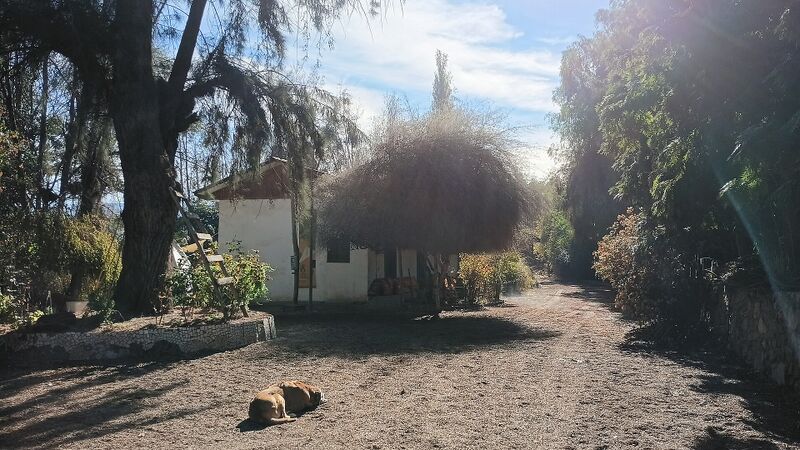
A small white building among tall trees, with a bare earth yard and a dog lying in the foreground.

The Museo Comunitario Cáñamo Aconcagua, a community hemp museum at San Felipe, Chile, June 2026.

This portal covers the ten countries filed here under the Americas: Canada and the United States in North America; Honduras, Mexico and Panama in Central America; Jamaica and Saint Vincent and the Grenadines in the Caribbean; and Brazil, Chile and Colombia in South America.

The plant first came with Europeans, for its fibre. The Spanish grew it under the name cáñamo in Mexico from the 16th century, and in the 17th century hemp from the valleys of Quillota and La Ligua in Chile was made into rigging for the ships of the Pacific. Hemp was sown in New France from the 1660s, and it was a major fibre crop of the colonies that became the United States.

The drug plant arrived by other routes. In Jamaica its name, ganja, came in the 19th century with indentured labourers from India. In Brazil, where the plant is called maconha and, in some regions, diamba, most 20th-century scholars held that enslaved Africans brought it across the Atlantic; the geographer Chris S. Duvall has questioned the evidence for that account.

The accessions documented here are still few. They include seed lines from Quindío in Colombia and from Jamaica, and herbarium sheets gathered from Canada to Chile.

30 accessions · 11 news items · 5 growing regions · 8 growing areas

Countries
1 accession · 1 news item
Brazil
1 accession · 1 news item
Canada
3 accessions · 0 news items
Chile
9 accessions · 1 news item
Colombia
1 accession · 0 news items
Honduras
6 accessions · 1 news item
Jamaica
2 accessions · 2 news items
Mexico
3 accessions · 0 news items
Panama
0 accessions · 1 news item
Saint Vincent and the Grenadines
4 accessions · 4 news items
United States
Featured article
Did you know...
  • ...that the Jesuit Alonso de Ovalle wrote in 1646 that Chile supplied all the ships of the South Sea with cordage and the armies of Peru with cord for their firearms, because the hemp they were made from grew in no other land?
  • ...that committees of officials in the Panama Canal Zone reported in 1925 and 1932 that marihuana grown there was not habit-forming in the way opium and cocaine were, and advised against legislation?
  • ...that Rio de Janeiro's city council, in Brazil, forbade the sale and use of the pito do pango in 1830?
  • ...that in Hawaii, in the United States, cannabis is called paka lōlō, literally "numbing tobacco"?
  • ...that a cannabis plant gathered at the Falls of Niagara in September 1858 became number 84 of Lawson's Canadian Plants, and that one sheet of it, Lawson 84 (1858), is at the Royal Botanic Garden Edinburgh?
  • ...that Mexico prohibited the growing and sale of marihuana throughout the country by a sanitary decree published in 1920?
Selected picture

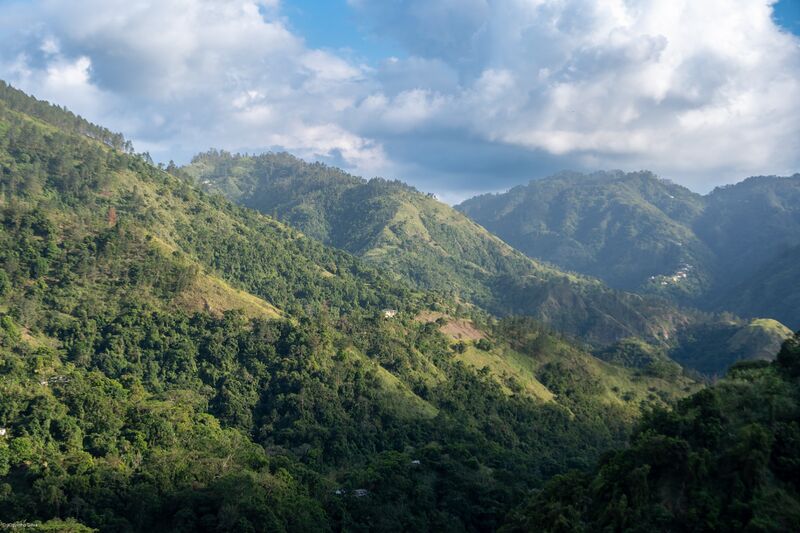
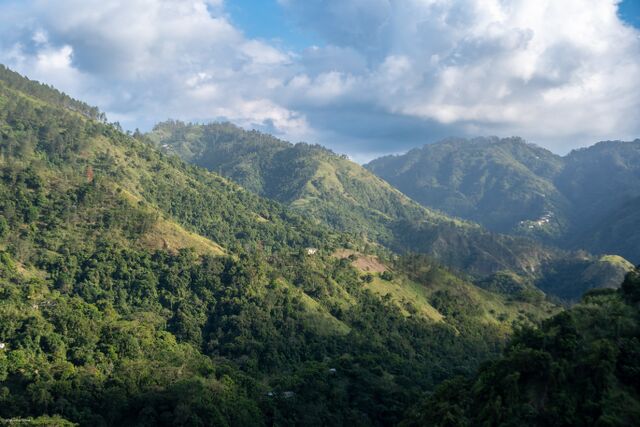
Forested mountain ridges under cloud.

The Blue Mountains of eastern Jamaica.
Latest news
1 Oct 2026Policy
The St Vincent Times reported on 1 October 2026 that the Medicinal Cannabis Authority (MCA) would host a consultation for traditional cultivators on Thursday 8 October from 1 p.m. to 4 p.m. at the Methodist Church Hall in Kingstown. The Minister of Agriculture, Forestry and Rural Transformation, Israel Bruce, was expected to attend. The report says the meeting follows a series of nationwide meetings with traditional cultivators and would discuss the Strategic Integration Plan and a proposed framework for bringing traditional cultivators into the legal medicinal cannabis value chain.
Saint Vincent and the Grenadines · Kingstown
10 Sep 2026Policy
Mexico News Daily reported that the Supreme Court of Justice of the Nation ruled by seven votes to two on 10 September 2026 that a person already holding a personal recreational use authorisation issued by the federal health risk regulator may prepare food containing tetrahydrocannabinol for their own exclusive consumption. The reasoning reported is that incorporating cannabis into food for personal use amounts to ordinary cooking rather than the manufacture of a regulated health product. The ruling directs the regulator to issue corrected authorisations, after it had granted a self consumption permit while expressly barring food preparation. The outlet reported that the ruling does not permit sale, distribution or supply to any third party, and does not extend to cannabis in medicines, cosmetics, vaping products or supplements, and it described the practical effect as limited.
Mexico
NILRZPGK4RD7VBNBT57GXOIMMA.png
3 Sep 2026Trafficking
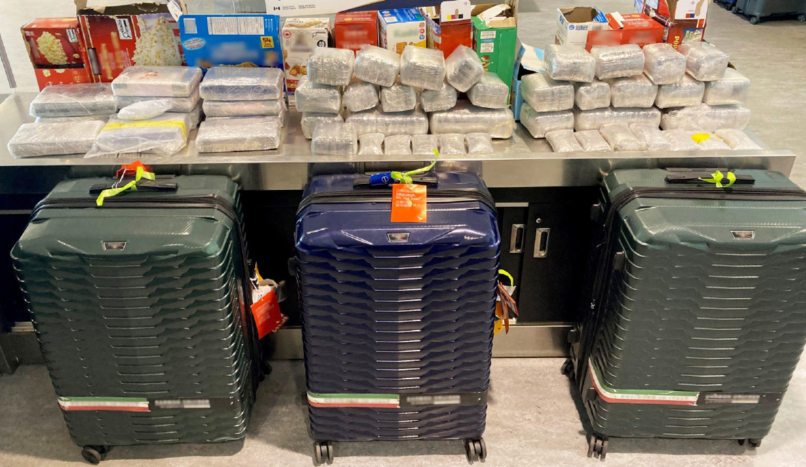
CTV News Toronto reported on 24 September 2026 that the Canada Border Services Agency had seized 44 kilograms of hashish and 13 kilograms of cocaine from suitcases at Toronto Pearson International Airport. A CBSA spokesperson told CTV that the seizure took place on 3 September, and a CBSA post reproduced in the article says the drugs were in a traveller's luggage destined for Sri Lanka. One person was arrested and handed to the Royal Canadian Mounted Police, and no details of charges or of the suspect were available. The report does not say where the hashish came from.
Canada · Ontario · Toronto Pearson International Airport
6 May 2026Policy
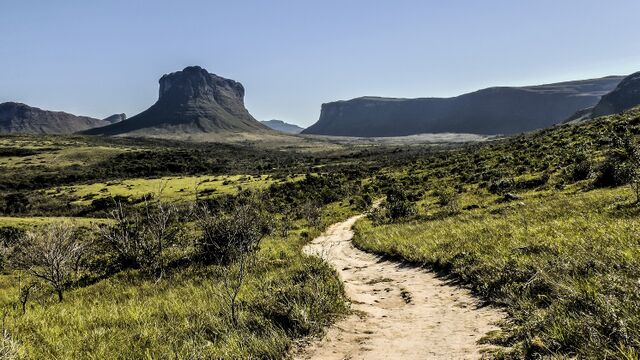
The Superior Tribunal de Justiça (STJ) reported that its Corte Especial, with Minister Og Fernandes reporting the case, unanimously held in case MI 379 that a mandado de injunção (writ of injunction) cannot be used to obtain authorisation for an individual to import and cultivate cannabis at home for medicinal purposes. The writ had been filed against the Ministry of Health and the health regulator Anvisa. The STJ reported that the court found no absolute regulatory omission, since partial rules already cover industrialised cannabis products, exceptional importation by individuals and authorisations for legal entities, and that creating a home cultivation regime by court order would take over a regulatory function belonging to the legislative and executive branches. It also reported that the court judged preventive habeas corpus, which the Third Section (Terceira Seção) already handles, the more suitable route, denied the order and declared moot the internal appeal against the refusal of an interim injunction.
Brazil
DSC_7888-1200x825.jpg
16 Apr 2026Policy
The Jamaica Information Service reported that the Cannabis Licensing Authority (CLA) launched its Medical Cannabis Special Permit Programmes at the AC Hotel by Marriott Kingston on Thursday 16 April 2026, under the Dangerous Drugs (Cannabis Licensing) (Interim) (Amendment) Regulations, 2025. CLA chief executive Farrah Blake said the Special Community Permit allows traditional and small-scale farmers to enter the industry together as a community or group. She said the Cultivator's Transitional Special Permit gives small-scale farmers two years to reach at least Tier One cultivator status. She said no fee is charged for either permit. Minister of State Delano Seiveright spoke at the launch.
Jamaica
1 Aug 1990Eradication
The United States Department of Justice reported that in 1990 the Drug Enforcement Administration, the Hawaii Department of Land and Natural Resources and the National Guard ran a special enforcement operation called Operation Wipeout against growers of high-grade cannabis throughout Hawaii. Using herbicidal spraying and manual eradication, the operation destroyed more than 700,000 marijuana plants, which the department estimated at three-quarters of the state's summer crop. William W. Mendel of the Army's Foreign Military Studies Office wrote in 1992 that the operation ran from August to October 1990 and that the DEA's experimental spot-spraying from helicopters used glyphosate.
United States · Hawaii