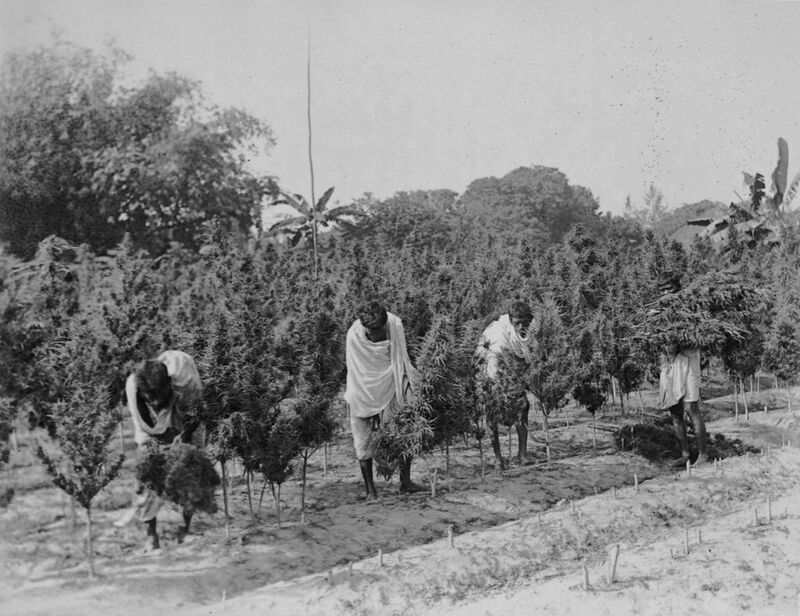
Ganja is the cured flowering and fruiting tops of cultivated female cannabis, prepared for smoking. It is one of the three preparations around which the cannabis economy of India and Bangladesh has been organised since at least the eighteenth century, alongside bhang, the leaf preparation, and charas, the separated resin. The three are distinguished by the part of the plant used: ganja is made only from a cultivated crop from which male plants have been removed and cannot be made from wild growth.
In Bengal the licensed crop was worked into three commercial forms, flat, round and broken or chur, which differed in how the harvested tops were pressed and in how much woody stalk they carried. Colonial excise taxed them at different rates and the Indian Hemp Drugs Commission of 1893–94 used the Bengal grades as the reference against which the products of other Indian provinces were compared.
The Narcotic Drugs and Psychotropic Substances Act defines ganja by plant part. The boundary that definition draws has been litigated in the Indian courts. Indenture carried its use beyond South Asia, to Natal and to the Caribbean. read more →