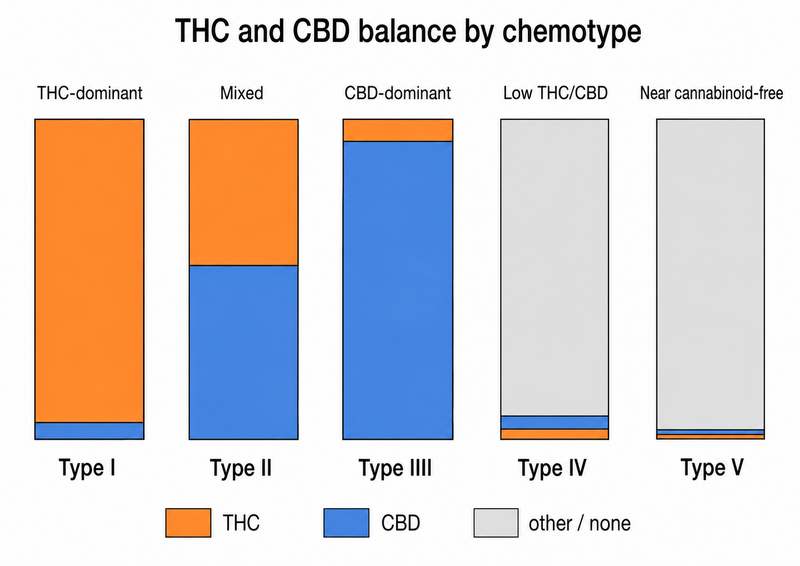
Chemotype is the classification of a cannabis plant or population by its dominant secondary-metabolite profile, most commonly the relative ratio of the principal cannabinoids tetrahydrocannabinolic acid (THCA) and cannabidiolic acid (CBDA). read more →
Portal:Chemistry
More actions
Cannabis chemistry examines the molecular structures, biosynthetic pathways and analytical methods for understanding cannabis phytochemistry. The plant produces over 140 cannabinoids, 200+ terpenes and numerous flavonoids and phenolic compounds, creating extraordinary chemical diversity that varies between regional populations and underlies differences in effects, aromas and traditional uses.
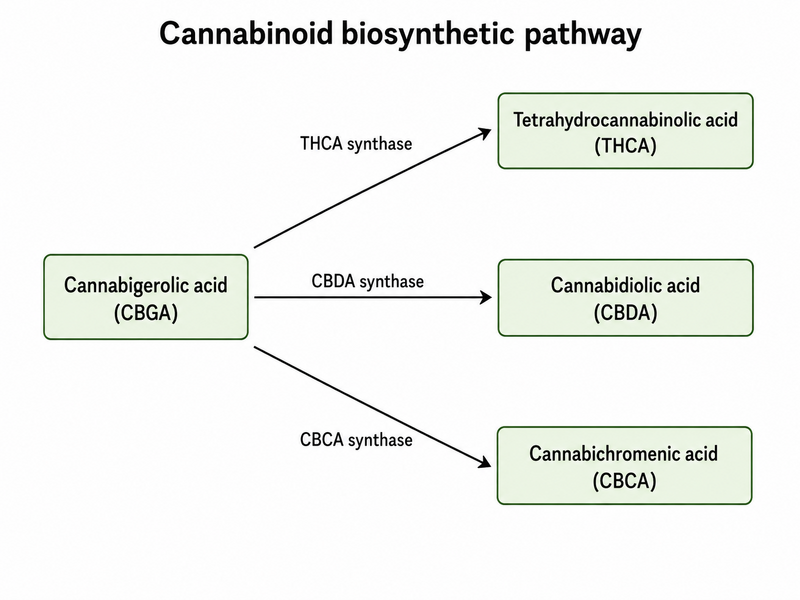
Cannabinoid biosynthesis begins with the polyketide pathway producing olivetolic acid, which combines with geranyl pyrophosphate to form cannabigerolic acid (CBGA), the "mother cannabinoid." Specific synthase enzymes then convert CBGA into THCA, CBDA or CBCA, which decarboxylate to their neutral forms (THC, CBD, CBC) through heat or aging. Terpene biosynthesis follows the MEP and MVA pathways, producing monoterpenes (myrcene, pinene, limonene) and sesquiterpenes (caryophyllene, humulene) that create regional "chemotypes" recognized by traditional farmers through scent alone.
Modern analytical chemistry employs HPLC, GC-MS and spectroscopic methods to quantify cannabinoids and profile terpenes, enabling documentation of regional chemical variation and authentication of traditional varieties. Understanding chemistry is essential for explaining why Himalayan charas differs from Moroccan kif, why some populations produce high THC while others maintain balanced cannabinoid ratios and how environmental factors influence chemical expression. This chemical knowledge complements genetic and botanical documentation of landrace diversity.
- ...that cannabis produces over 140 different cannabinoids, though most occur in trace amounts with only THC, CBD and CBG present in significant quantities?
- ...that CBGA (cannabigerolic acid) is the precursor to all major cannabinoids, earning it the nickname "the mother cannabinoid"?
- ...that decarboxylation (heat-induced loss of CO₂) converts THCA to THC, which is why raw cannabis isn't psychoactive but smoked or cooked cannabis is?
- ...that myrcene is the most abundant terpene in many cannabis varieties, often comprising 40–60% of total terpene content?
- ...that β-caryophyllene is unique among cannabis terpenes in directly activating cannabinoid CB2 receptors, making it both a terpene and a cannabinoid?
- ...that cannabis produces cannflavins A, B and C, unique flavonoids found nowhere else in nature that show anti-inflammatory properties?
- Cannabinoid Structures
- Cannabinoid · THC · CBD · CBG · CBC · CBN · THCV · CBDV · THCA · CBDA · CBGA · Stereochemistry
- Cannabinoid Biosynthesis
- Cannabinoid biosynthesis · THCA synthase · CBDA synthase · CBCA synthase · Polyketides
- Terpene Structures
- Cannabis terpenes · Myrcene · Pinene · Limonene · Terpinolene · Caryophyllene · Humulene · Linalool · Nerolidol · Monoterpenes · Sesquiterpenes
- Terpene Biosynthesis
- Terpene biosynthesis · MEP pathway · MVA pathway · Geranyl pyrophosphate · Farnesyl pyrophosphate
- Other Secondary Metabolites
- Cannflavins · Flavonoids · Phenolic compounds · Sterols · Fatty acids · Alkaloids
- Analytical Chemistry Methods
- HPLC · Gas chromatography · GC-MS · LC-MS · Mass spectrometry · UV-Vis spectroscopy · NMR spectroscopy
- Cannabinoid Analysis
- Potency testing · Chemotype · GC-FID · Method validation
- Terpene Analysis
- Terpene profiling
- Sample Preparation
- Decarboxylation · Solid-phase extraction
- Extraction Chemistry
- Cannabis extraction
- Chemical Stability & Degradation
- Cannabinoid degradation · Decarboxylation · Oxidation
- Chemical Properties
- Solubility · Lipid solubility · Volatility
- Pharmacological Chemistry
- Cannabinoid receptors · Structure–activity relationships · Pharmacokinetics · Hepatic metabolism · Cytochrome P450
- Quality Control Chemistry
- Cannabis contaminant testing
- Research Methods
- Compound isolation · Structural elucidation · Chemical synthesis
- Submit analytical data: Share cannabinoid and terpene profiles from tested samples
- Document methods: Add details on analytical techniques and protocols
- Contribute structures: Create or improve chemical structure diagrams
- Report regional variation: Document chemical differences between populations
- Add references: Include citations to chemistry research papers
- Create priority articles: Cannabis chemistry, Cannabinoid biosynthesis, Cannabis terpenes, Cannflavins
Chemistry · Cannabinoid Structures · Cannabinoid Biosynthesis · Terpene Structures · Terpene Biosynthesis · Other Metabolites · Analytical Methods · Cannabinoid Analysis · Terpene Analysis · Sample Preparation · Extraction · Stability & Degradation · Properties · Pharmacology · Quality Control · Research Methods