
RSC-IND-MAN-0120200001
More actions
| Manipuri General Population 2020 | |
|---|---|
| RSC-IND-MAN-0120200001 | |

| |
| A fast-flowering purple variant of Manipuri outdoors in late November (RSC listing caption, 2019) | |
| At a Glance | |
| Classification | Landrace |
| Accession Type | General population |
| Primary Purpose | Recreation |
| Plant Height | 2–5 m |
| Photoperiod | Short-day |
| Aroma | Hops, mint, earthy, tangerine |
| Effects | Intense, energising, euphoric |
| Botanical Characteristics | |
| Growth Pattern | Christmas tree |
| Processing | |
| Method | Ganja |
| Notes | Lightly seeded buds, semi-dried and bound in cloth before drying and curing |
| Location | |
| Country | India |
| Province/State | Manipur |
| Coordinates | 24.80, 93.94 |
| Collection | |
| Method | Seeds |
| Sourcing Type | Point of Origin |
| Autochthonous | Yes |
| Date | 2020 |
| Collector | Angus |
| Conservation | |
| Priority | Medium |
| Introgression | Minimal |
| Cultivation | |
| Status | Unknown |
| System Type | Unknown |
| Cycle 1 Planting | June–July |
| Cycle 1 Harvest | December–February |
| Preservation | |
| Seed Storage | The Real Seed Company |
Manipuri General Population 2020 is a landrace cannabis accession from Imphal, Manipur, India, listed as Manipuri in the seed catalogue of The Real Seed Company (RSC).[1] RSC describes it as a Manipuri cannabis landrace domesticated for ganja production and cultivated in the Imphal Valley of northeastern India.[1]
Geography
The listing gives the sourcing as The Real Seed Company, Imphal, Manipur, Northeast India (2020), and a latitude of about 25° N. RSC calls the Imphal Valley a historic ganja-growing region.[1] It files the line under its Tropical India category, which describes tropical India as the likely centre of origin of the classic Sativa landraces.[2]
History
According to RSC, the farmers of the Imphal Valley are ethnically Meitei and are related to the Thai, Shan and Lao peoples, and Meitei farmers keep seed from the best and most potent plants for the next season, which RSC credits with the quality and potency of exceptional Manipuri plants.[1] It describes ganja culture in Manipur as standing at the frontier of the historic Bengali ganja heartlands to the west and Burma and Thailand to the east, a pedigree it says Manipuri domesticates reflect.[1]
In a blog post of June 2023 RSC reports that cannabis is a common household herb among the Meitei, and describes small, carefully tended Meitei plots whose ganja is smoked by the household and its friends. The post adds that the best accession RSC obtained from Manipur came from a small plot in a Meitei village where the family saved seed each year from the best plants, without naming the accession.[3] A post of October 2024 reports that cultivators in regions with a long ganja history such as Manipur cut down males and keep seed from good material.[4] In a post of June 2025 RSC reports that it donated seed of more than 140 accessions, including ganja landraces from Manipur, to a study of seed morphology, and suggests that a Tai kingdom that ruled much of what is now northeastern India may have had a part in introducing drug-type cannabis to medieval India through Assam and Manipur.[5]
Cultivation Details
RSC gives the purpose as ganja, which it glosses as seedless or lightly seeded buds, and the regional growing period as about five to six months from seed to harvest; versions of the listing from August 2020 to January 2023 gave the regional harvest as December to February.[1][6][7] It reports that fields are usually sown around June to July and harvested in December to January, that buds are allowed to be lightly seeded, and that earlier-maturing plants can be ready by the end of November. RSC describes the traditional Manipuri technique as semi-drying the buds, binding them tightly with cloth for a day, then unpacking and drying them and curing them for a couple of months. It lists greenhouse or outdoor growing.[1]
Botanical Characteristics
RSC gives a height of up to 4 metres and describes a potent Sativa-type landrace with a euphoric and often intense high like those of classic Thai and Lao landraces. Versions of the listing from August 2020 to January 2023 gave a height of 2 to 5 metres.[1][6][7] RSC reports that plants range in colour from green to purple, and that purple plants are especially prized by cultivators as the chakhao type, chakhao being the Meitei name for a local variety of black aromatic sticky rice.[1] Versions from August 2020 to October 2025 classified the line as Cannabis sativa subsp. indica var. indica.[6][8]
Aroma
RSC lists hops, mint, earthiness and tangerine.[1]
Notes
RSC advises that classic Tai and Lao varieties are typically superior to Manipuri ganja and a better place to look for standout tropical Sativa plants.[1] In a blog post of July 2019 it reports that ganja landraces such as Manipuri seldom contain significant levels of CBD, because they have undergone more intensive selection for potency.[9]
Smoke Reports
Gallery
-
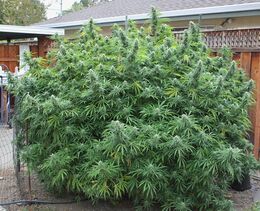 Manipuri outdoors in the Imphal Valley (RSC listing caption, 2019)
 -
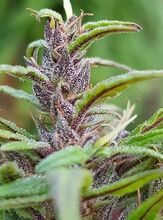 Purple Manipuri flower top (RSC listing)
 -
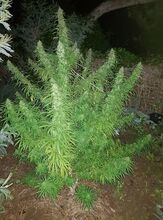 Manipuri plants in flower at night (RSC listing)
 -
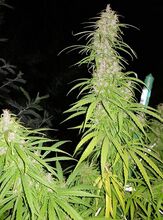 Manipuri flower top at night (RSC listing)


See Also
References
- ↑ 1.00 1.01 1.02 1.03 1.04 1.05 1.06 1.07 1.08 1.09 1.10 "Manipuri". The Real Seed Company. Retrieved 17 September 2026.
- ↑ "Tropical India". The Real Seed Company. Retrieved 17 September 2026.
- ↑ "Ganja in Nagaland and Manipur, Northeast India". The Real Seed Company. 26 June 2023. Retrieved 17 September 2026.
- ↑ "What's the difference between landrace Indicas and heirloom Indicas?". The Real Seed Company. 12 October 2024. Retrieved 17 September 2026.
- ↑ "Ancient Yunnan and the Tai roots of Indian cannabis culture". The Real Seed Company. 3 June 2025. Retrieved 17 September 2026.
- ↑ 6.0 6.1 6.2 "Manipuri". The Real Seed Company. Archived from the original on 5 August 2020. Retrieved 17 September 2026.
- ↑ 7.0 7.1 "Manipuri". The Real Seed Company. Archived from the original on 30 January 2023. Retrieved 17 September 2026.
- ↑ "Manipuri". The Real Seed Company. Archived from the original on 8 October 2025. Retrieved 17 September 2026.
- ↑ "CBD in Cannabis landraces". The Real Seed Company. 22 July 2019. Retrieved 17 September 2026.