
Main Page
More actions
.png)
Landrace.wiki
The open database for landrace cannabis populations, their genetics and the traditional knowledge that sustains them.
Landrace.wiki is the open database for landrace cannabis—populations, their genetics, and the knowledge around them. Browse documented accessions, track conservation efforts, and contribute to preserving genetic diversity before it’s lost.
Landrace Cannabis Growing Region and Accession Map
- Stable8
- Vulnerable21
- Endangered43
- Critical89
- Extinct127
Featured Growing Regions
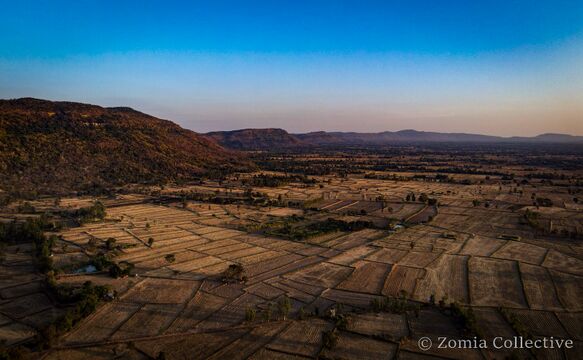
Northeastern Thailand
The Khorat Plateau NLD landrace corridor retains core Thai-stick genetics, but diversity is eroding rapidly; conservation and documentation are urgently needed.
Endangered 55 accessions
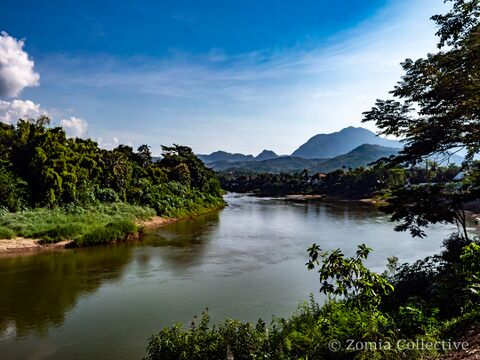
Northern Laos
Rugged northern Lao highlands with NLD-type landraces still in cultivation, but under intense pressure; documentation and conservation are urgent.
Critical 3 accessions
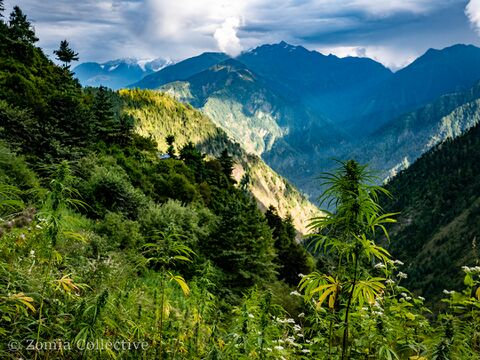
Western Himalayas
Charas heartland where high-elevation, village-managed NLD landraces persist despite tourism and law-enforcement pressure—resilient yet not invulnerable.
Vulnerable 156 accessions
Featured Accessions
No image
No image
We are witnessing the rapid disappearance of traditional cultivation knowledge and genetic diversity in cannabis. These landrace populations represent thousands of years of natural and human selection, containing unique genetic traits and chemical profiles. Systematic documentation and conservation efforts can serve as a bridge—preserving irreplaceable genetic heritage while supporting traditional communities and advancing our understanding of this remarkable plant.
Explore the Database
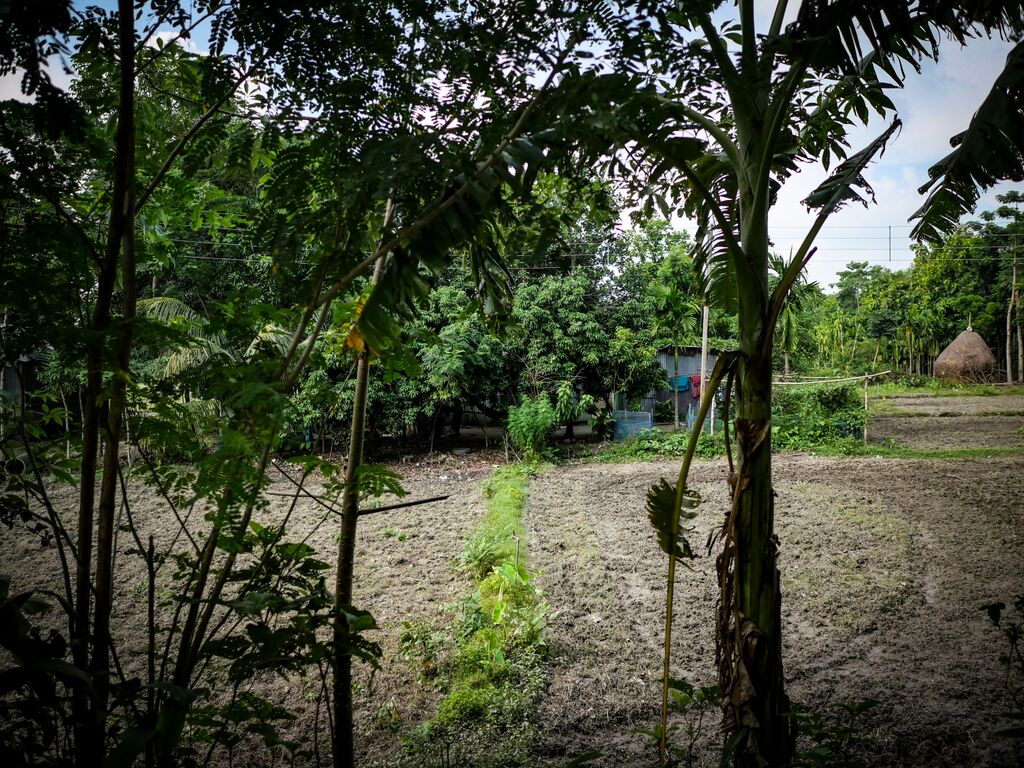
ZOM-IND-WEB-0620250049
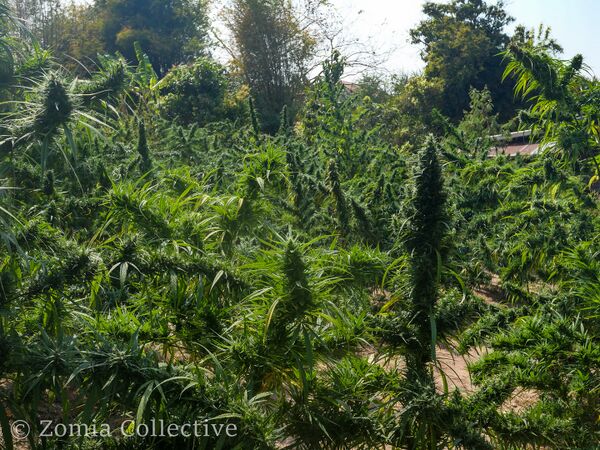
Patlakhawa General Population 2025 is a domesticate landrace cannabis accession collected by Éloïse of the Zomia Collective in West Bengal, India.
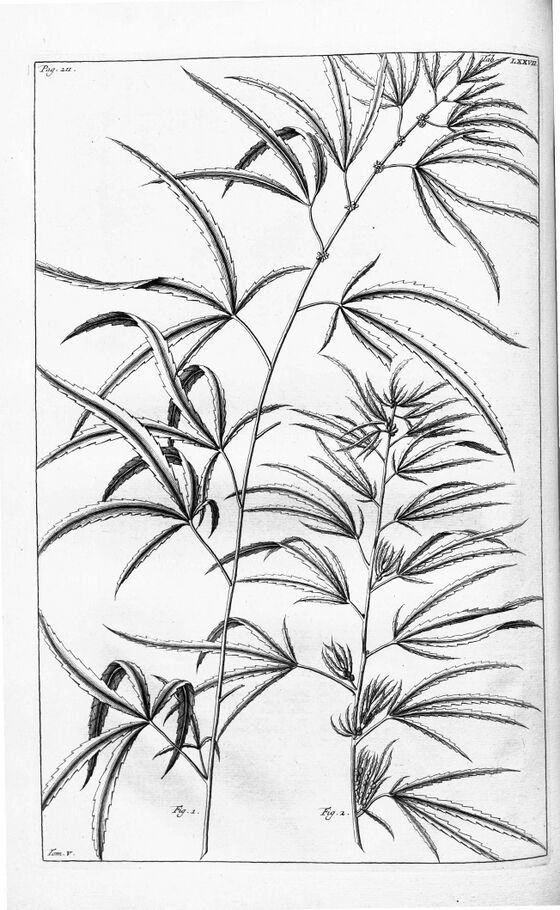
Herbarium Amboinense (1690)
The Herbarium Amboinense (Dutch: Het Amboinsche Kruid-boek) is a six-volume botanical catalogue of the plants of Ambon Island in the Maluku Islands of Indonesia, composed by the German-born naturalist Georg Eberhard Rumphius (1627–1702) during his service with the Dutch East India Company (VOC). Edited by Johannes Burman, it was published posthumously in Amsterdam between 1741 and 1750, describing approximately 1,200 species. The botanist E.M. Beekman has described the work as foundational to the study of Moluccan flora.
Chapter XXXIV of Volume 5 (pages 208–211, with Plate LXXVII) contains a detailed account of cannabis in the eastern Indonesian archipelago, including descriptions of three forms of the plant, multiple preparation methods, medicinal uses and the Malay concept of Hayal. The chapter uses the name Cannabis indica for the Ambon plant, a designation that predates Lamarck's formal taxonomic description of Cannabis indica in 1785. read more →
Encyclopedia
Latest reporting
Latest publications
Cannabis eradications
Recent updates