
Main Page
More actions
.png)
Landrace.wiki
The open database for landrace cannabis populations, their genetics and the traditional knowledge that sustains them.
Landrace.wiki is the open database for landrace cannabis—populations, their genetics, and the knowledge around them. Browse documented accessions, track conservation efforts, and contribute to preserving genetic diversity before it’s lost.
Landrace Cannabis Growing Region and Accession Map
- Stable8
- Vulnerable21
- Endangered43
- Critical89
- Extinct127
Featured Growing Regions
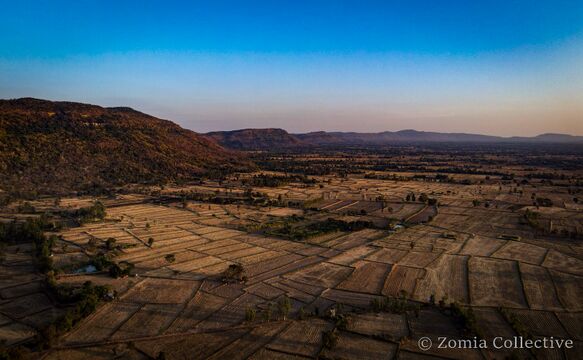
Northeastern Thailand
Southeast Asia - Khorat Plateau
The Khorat Plateau NLD landrace growing corridor retains core Thai-stick genetics, but diversity is eroding rapidly; conservation and documentation are urgently needed.
Endangered 55 accessions
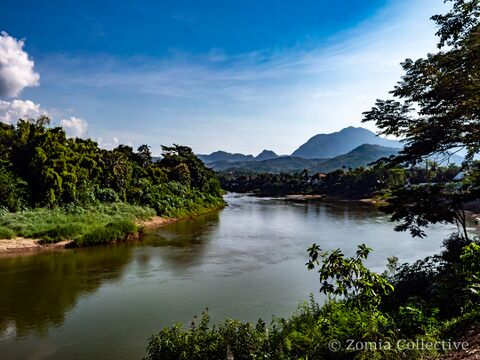
Northern Laos
Southeast Asia - Lao Highlands
Rugged northern Lao highlands with NLD type landraces still in cultivation, but under intense pressure; documentation and conservation are critical in the face of imminent extinction.
Critical 3 accessions
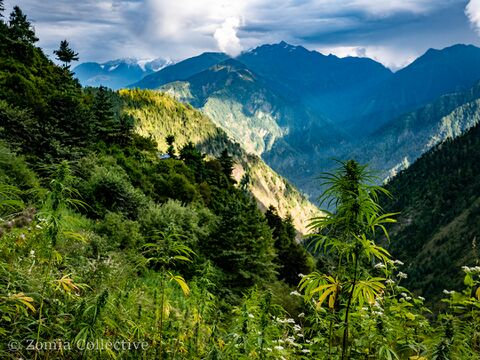
Western Himalayas
South Asia - Western Himalayas
Western Himalayan charas heartland where the cultivation of high elevation adapted NLD type landraces and consumption of charas are a part of everyday village life.
Vulnerable 156 accessions
Featured Accessions
No image
No image
We are witnessing the rapid disappearance of traditional cultivation knowledge and genetic diversity in cannabis. These landrace populations represent thousands of years of natural and human selection, containing unique genetic traits and chemical profiles. Systematic documentation and conservation efforts can serve as a bridge—preserving irreplaceable genetic heritage while supporting traditional communities and advancing our understanding of this remarkable plant.
Explore the Database
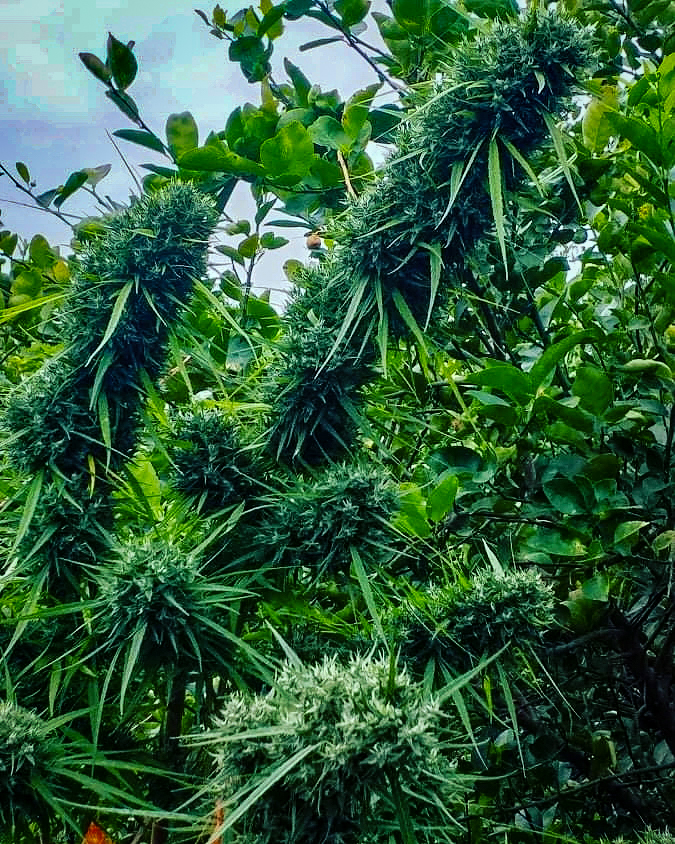
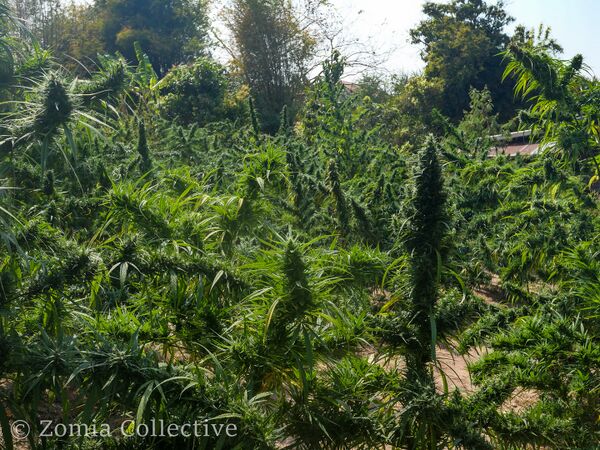
ZOM-THA-WES-0420250001
Kroeng Krawia General Population 2024 is a domesticate landrace cannabis accession collected by Éloïse of the Zomia Collective in Kanchanaburi Province, Thailand.
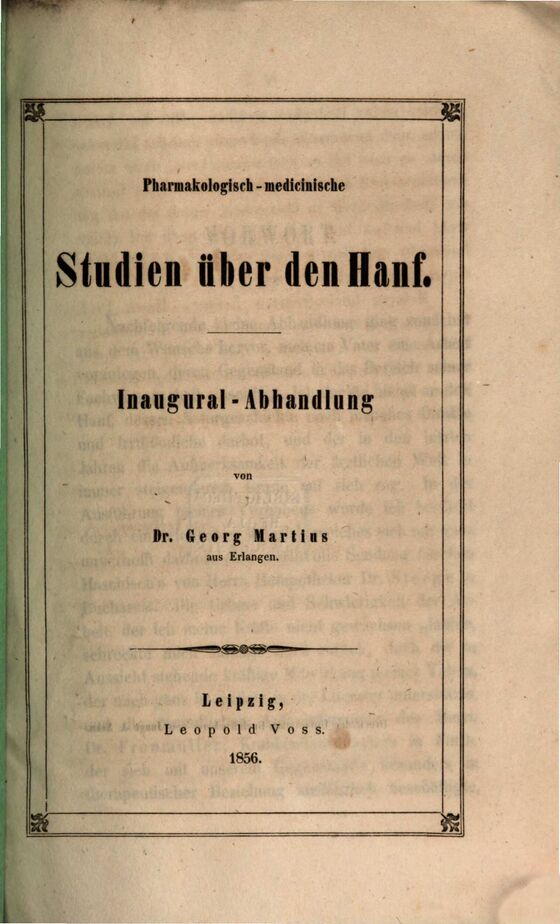
Pharmakologisch-medicinische Studien über den Hanf (1856)
The Pharmakologisch-medicinische Studien über den Hanf ("Pharmacological-Medical Studies on Hemp") is the inaugural dissertation of Dr. Georg Martius of Erlangen, published in Leipzig by Leopold Voss in 1856. The work surveys the hemp plant across four domains: history, botany, pharmacognosy and chemistry. It includes a chronological bibliography of approximately 200 pre-1856 references on cannabis spanning three centuries and is one of the earliest German academic works to treat the subject systematically.
On the question of whether Indian hemp constitutes a separate species, Martius sides with Kaempfer, Willdenow and Roxburgh against Lamarck. He synthesises Alexander Christison's 1849–1851 Edinburgh grow-out experiments, which produced taller plants with narrower leaf segments but no visible resin, to argue that resin production reflects climatic expression rather than fixed botanical distinction.
The dissertation was partly enabled by a shipment of fresh hashish from Dr. Steege, a court pharmacist (Hofapotheker) in Bucharest. Martius also acknowledges Prof. von Gorup-Besanez for supervising the chemical work and Prof. Schnizlein for botanical guidance. read more →
Encyclopedia
Latest reporting
Latest publications
Cannabis eradications
Recent updates
List of abbreviations:
- N
- This edit created a new page (also see list of new pages)
- m
- This is a minor edit
- b
- This edit was performed by a bot
- (±123)
- The page size changed by this number of bytes