
Main Page
More actions
.png)
Landrace.wiki
The open database for landrace cannabis populations, their genetics and the traditional knowledge that sustains them.
Landrace.wiki is the comprehensive database for traditional cannabis genetics and their conservation status. Browse our collection of documented varieties, track conservation efforts, and contribute to preserving genetic diversity before it's lost forever.
⚠️ Conservation Alert: We've documented 288 landrace varieties globally. Current status: 🟢 127 Stable • 🟡 89 Vulnerable • 🟠 43 Endangered • 🔴 21 Critical • ⚫ 8 Lost Forever
Explore the Database
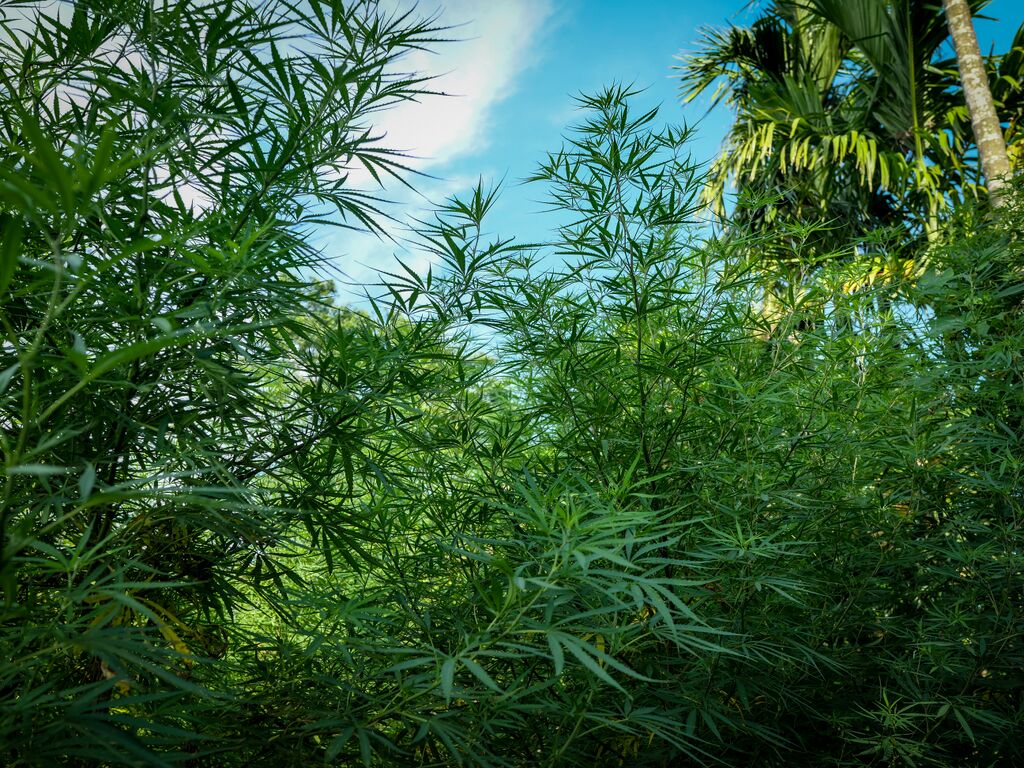
ZOM-IND-WEB-0620250072
Jaldapara 'Hollong' General Population 2025 is a domesticate landrace cannabis accession. This accession was documented by Isabella & Éloïse in June 2025. A total of 1135 seeds were purchased by Éloïse from a local alias 'Ajay'. The seeds come from a cultivated landrace cannabis population of 100+ plants grown near Hollong village. Hollong is located in Alipurduar District, West Bengal, India, within the Jaldapara landrace cannabis growing area of The Dooars growing region.
Cannabis in Cooch Behar State
The history of cannabis in Cooch Behar State covers the cultivation, consumption, trade and regulation of cannabis in the princely state of Cooch Behar, a feudatory state of British India in the north Bengal sub-Himalaya, from the later nineteenth century until the state's merger into West Bengal in 1950. The state regulated cannabis under its own Cooch Behar Excise Act of 1878, operating a licensed excise system that drew its structure from the Bengal Presidency model but distributed ganja through state-run warehouses, the golahs, rather than through the caste-managed contractor system used in the directly administered districts.
Cannabis grew wild across the territory as a weed of the sub-Himalayan belt, and ganja and bhang were in customary use among the Rajbanshi cultivating community and the Bengali Muslim settlers of the southern parganas. Commercial cultivation was prohibited within the state, which procured its ganja by import from the Bengal Presidency Ganja Mahal in neighbouring Rajshahi and issued it for retail from the sub-divisional golahs. The system tracked the Bengal Presidency on rates and procedure, returned a steady minor revenue and operated for some seven decades without significant public-order disturbance.
Cooch Behar acceded to the Indian Union in 1949 and merged into West Bengal as Cooch Behar district in 1950, when its excise law was assimilated to the Bengal-derived Indian framework and the 1878 Act was superseded. The simple homestead agronomy of the state's cultivator population is the substrate from which the surviving landrace cannabis populations of the present Cooch Behar district descend. read more →
Encyclopedia
Latest reporting
Latest publications
Cannabis eradications
Featured Varieties
🟡 Vulnerable • Central Thailand
Legendary sativa from Thailand's central plains, known for soaring cerebral effects and traditional bamboo stick curing. Facing pressure from hybrid contamination and changing cultivation practices.
🟠 Endangered • Northern Afghanistan
Heavy indica from Afghanistan's historic hash-making region. Dense, resinous buds with sedating effects. Population declining due to ongoing regional conflicts and security issues.
🔴 Critical • Himachal Pradesh, India
Sacred variety from the isolated village of Malana, traditionally used for high-grade charas production. Facing extinction from tourism pressure and commercialization.
We are witnessing the rapid disappearance of traditional cultivation knowledge and genetic diversity in cannabis. These landrace populations represent thousands of years of natural and human selection, containing unique genetic traits and chemical profiles. Systematic documentation and conservation efforts can serve as a bridge—preserving irreplaceable genetic heritage while supporting traditional communities and advancing our understanding of this remarkable plant.
Recent Updates
List of abbreviations:
- N
- This edit created a new page (also see list of new pages)
- m
- This is a minor edit
- b
- This edit was performed by a bot
- (±123)
- The page size changed by this number of bytes
4 July 2026
|
|
01:57 | Ethnobotanical Aspects of Cannabis in Southeast Asia (1975) 2 changes history −469 [Eloise Zomia (2×)] | |||
|
|
01:57 (cur | prev) +202 Eloise Zomia talk contribs (CS1 conform: convert raw-inline refs to cite templates) | ||||
|
|
01:03 (cur | prev) −671 Eloise Zomia talk contribs (Re-type Historical Source -> Book chapter; up-link parent volume; harmonise imprint) | ||||
|
|
N 01:57 | Template:Infobox Book chapter 2 changes history +3,031 [Eloise Zomia (2×)] | |||
|
|
01:57 (cur | prev) +34 Eloise Zomia talk contribs (Emit Has source editor from editor param) | ||||
| N |
|
01:03 (cur | prev) +2,997 Eloise Zomia talk contribs (Create {{Infobox Book chapter}} (new Book chapter page type)) | |||
| 01:57 | Template:Infobox Historical Source diffhist +34 Eloise Zomia talk contribs (Emit Has source editor from editor param) | ||||
| 01:57 | Template:Infobox book diffhist +46 Eloise Zomia talk contribs (Emit Has source editor; Has source author falls back to editor for edited volumes) | ||||
| N 01:03 | Cannabis and Culture (1975) diffhist +12,565 Eloise Zomia talk contribs (Create Cannabis and Culture (1975) Book page (Vera Rubin ed., Mouton 1975)) | ||||
| N 01:03 | Category:Book chapters diffhist +308 Eloise Zomia talk contribs (Create Category:Book chapters) | ||||
| N 01:03 | Property:Has parent volume diffhist +362 Eloise Zomia talk contribs (Create Has parent volume (Page-typed): links a Book chapter to its parent Book volume) | ||||
3 July 2026
| N 19:40 | Research:2025-01-01/Journal article/comparative-analysis-of-cannabis-legalization-in-south-africa-and-zimbabwe-trajectories-commonalities-and diffhist +1,557 Eloise Zomia talk contribs (Create ResearchItem record (South Africa batch 2026-07-03; citation-verified via Crossref)) | ||||