
Main Page
More actions

The encyclopedia and open conservation database for landrace cannabis populations, their genetics and the traditional knowledge that sustains them.
Accession Map
Filter by collection year, classification, priority or provenance, and select a marker for accession details. Every figure on this card describes the accessions currently shown. A further 81 documented accessions carry no coordinates yet and cannot be mapped.
Explore the database

Stewart herbarium specimen, Rawalpindi (1913)
Stewart s.n., Rawalpindi is an accession record for an unnumbered gathering of Cannabis sativa collected by R. R. Stewart at Rawalpindi in February 1913. Rawalpindi is now in Rawalpindi District, Punjab, Pakistan. The New York Botanical Garden holds the herbarium sheet as catalogue 1414430. GBIF publishes it as occurrence 1929221630.
Featured growing regions and areas

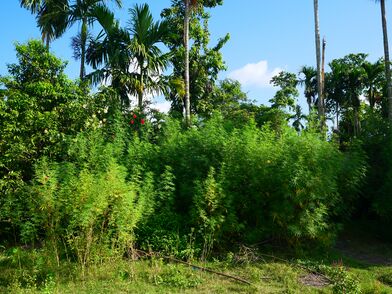
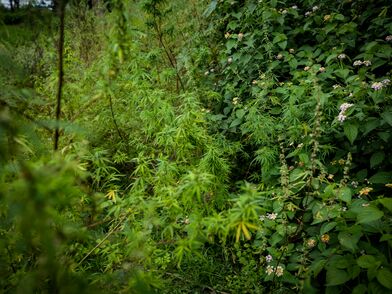
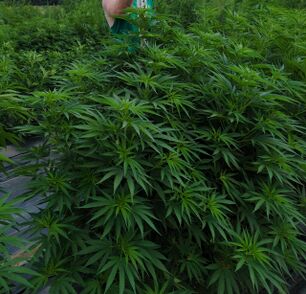


Dioecy
Dioecy is the condition in which male and female flowers are borne on separate individuals, so that any one plant is either pollen-bearing (staminate) or seed-bearing (pistillate). Cannabis is normally dioecious: a crop raised from seed separates into male and female plants in roughly equal numbers. The two sexes differ in the structure of their flowers and, less sharply, in growth habit. Dioecy is the ancestral and prevailing condition in the family Cannabaceae, shared with the sister genus Humulus, the hops; a minority of cultivated hemp lines are instead monoecious, carrying both kinds of flower on one plant.
The separation of the sexes shapes how cannabis is grown and how its populations are structured. Because cannabinoids accumulate mainly in the resin of the unfertilised female inflorescence, drug-type and cannabinoid crops are grown as female-only stands. Excluding pollen is central to their cultivation, since a pollinated inflorescence sets seed in place of resin. … read more →
Encyclopedia
Latest publications
Latest reporting



Recently updated
Start with the record
Learn what an accession is, how to read its fields and maps, and what its conservation priority means.
Know a landrace? Help document it.
Field observations, photographs, corrections, sources and translations all strengthen the open record.